
THE DURAND GROUP





February 1918, Loos Salient, The Western Front.
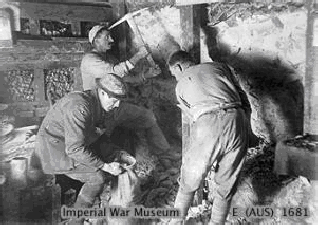
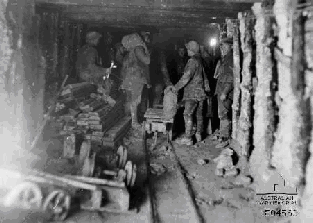
"To the north of Lens near Hulluch, where I went through the workings with Sanderson, the whole defence of the front appears to be underground. The infantry garrison lives underground, trench mortars and their crews are underground. The machine guns are underground and for a mile behind the front line the communication trenches are underground. The light railway delivers stores to the gun emplacements by an even lighter railway - underground!"
Charles Bean, Australian Official Historian of the Great War
1. Introduction
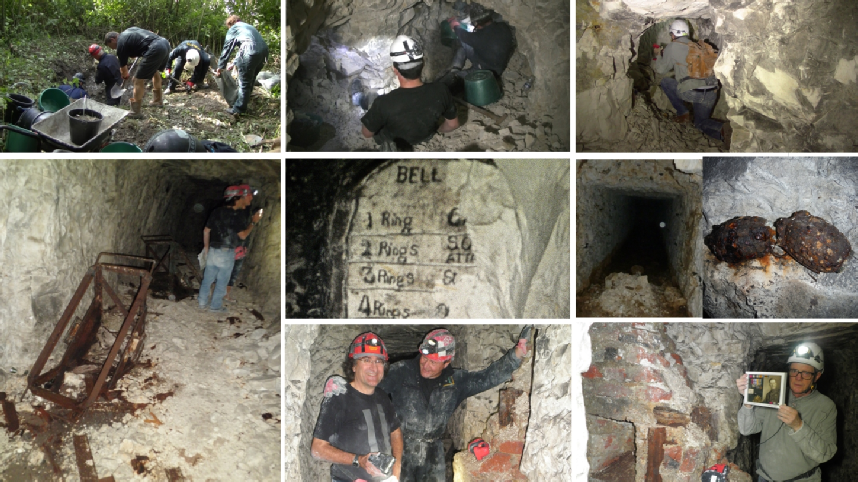
Hulluch Tunnel (pronounced oo-loo), also referred to as Hulluch Subway, is an important First World War underground feature in the Loos (pronounced lows) Salient of the Western Front. It is situated between the town of La Bassée and the City of Lens in a mining area of crucial importance to France's pre-war coal needs.







3. Summary of available information:
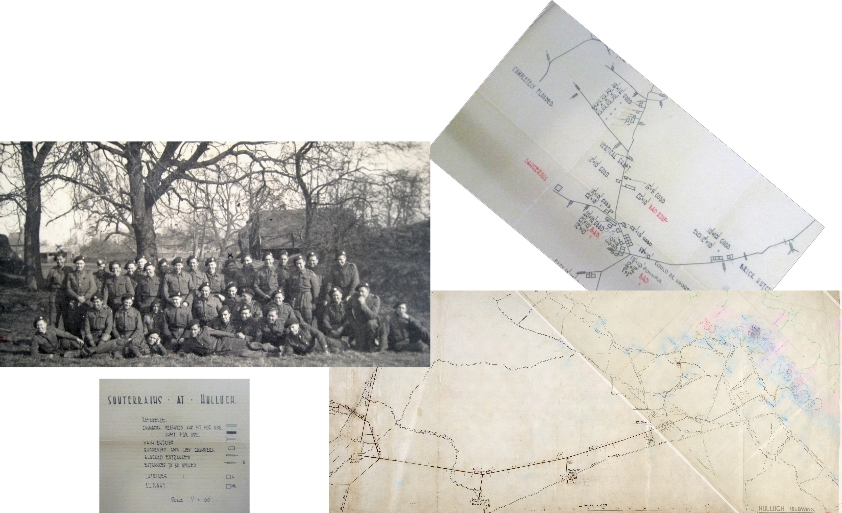
Four primary archival sources provide us with much information on their workings in addition to the maps and plans available separately, Firstly, the war diary of 253 Coy RE (253 Coy War Diary and Reports Jan -Jul 1916.pdf and 253 Coy War Diary and Reports Jul 1916-1919.pdf including weekly mining reports. Secondly, the unpublished private memoirs of Lt Francis E Howkins, who served in No2 section in the Hulluch area between 1915 and 1917. (F E Howkins - Under No Mans Land.pdf) Both these describe some of the early deep mine fighting and the construction of the Hulluch Subway up to August 1917.
Thirdly, Major Sanderson was the chief architect of many of the defensive features to be found in the tunnels and we have access, by permission, to his personal notes on some of the designs he drew for their construction and defence. Lastly, as electrical power and lighting was common to most underground workings, the war diary of the Australian Electrical, Mechanical, Mining and Boring Company (The ABC Company) (ABC awm 4-16-1-1.pdf) is also key to our knowledge base.



2. Historical perspective
The Battle of Loos (September 25th – October 10th 1915) saw British gains to the north and south of the village although, in effect, the new front line created only a shallow salient still vulnerable to German threat from several vantages. The villages of Auchy and Hulluch had not been taken in the north and the Germans still had control over several important mining centres on the northern outskirts of Lens from which they had a commanding position over the British support lines.
As the British stabilised their front line, mining sectors were soon established to counter the substantial German underground threat (from south to north): Double Crassier – Copse – Hill 70 (173 and 258 Coys RE); Hulluch-St Elie (253 Coy RE); Hohenzollern - Auchy (170 Coy RE). Although all these sectors were to become heavily engaged in underground warfare during the next two years it is the Hulluch-St Elie Sector that forms the basis of this project design.
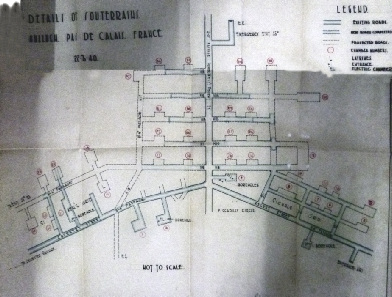
In January 1916 253 Tunnelling Coy RE was deployed in front of Hulluch which was subsequently divided into two areas – Hulluch and St Elie. Two sections of sappers were allocated to each area and work quickly began sinking shafts in an effort to counter the enemy underground. In November 1916 a substantial underground communication scheme was commenced - linked to the fighting system that eventually extended for four miles as far north as the La Bassée canal.
The communication subway, of course, was not a totally new concept and an earlier manifestation in the form of the Russian Sap – a shallow, covered conduit driven out into no mans land to aid infantry trench defences and raids – was oft used even before the 1916 Somme Offensive. Leaving aside the artillery bombardments that often preceded or accompanied an actual attack, the infantry, in a seemingly endless cyclical trudge from front to rear lines, had always been vulnerable to sporadic artillery and trench mortar fire. Wastage along the front therefore varied enormously. To minimise this in certain hot spots a myriad of communication tunnels were constructed, in effect moving the bulk of the troops underground. None was more elaborate than the Hulluch-St Elie communication scheme.
In August 1917, after eighteen months, 253 Coy were replaced by 3rd Australian Tunnelling Coy, under the command of Major Alexander Sanderson DSO MC and Bar. An elaborate programme of work was then commenced to defend the tunnels against projected enemy infiltration. A month before the Armistice, 3ATC were relieved by 176 Company RE and re-deployed to Belgium.
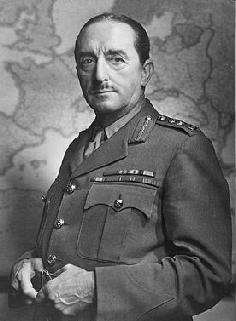
In 1940 the Hulluch Tunnels were re-engineered by 240th Army Field
Company RE and sections of a reconstituted 170th Tunnelling Company RE,
as a rear HQ for Lt Gen Sir Alan Brooke’s II Corps. Five of the tunnelling
officers served in the same capacity in the First World War, one of whom -
Captain Arthur Wood - actually spent the war with the 170th.
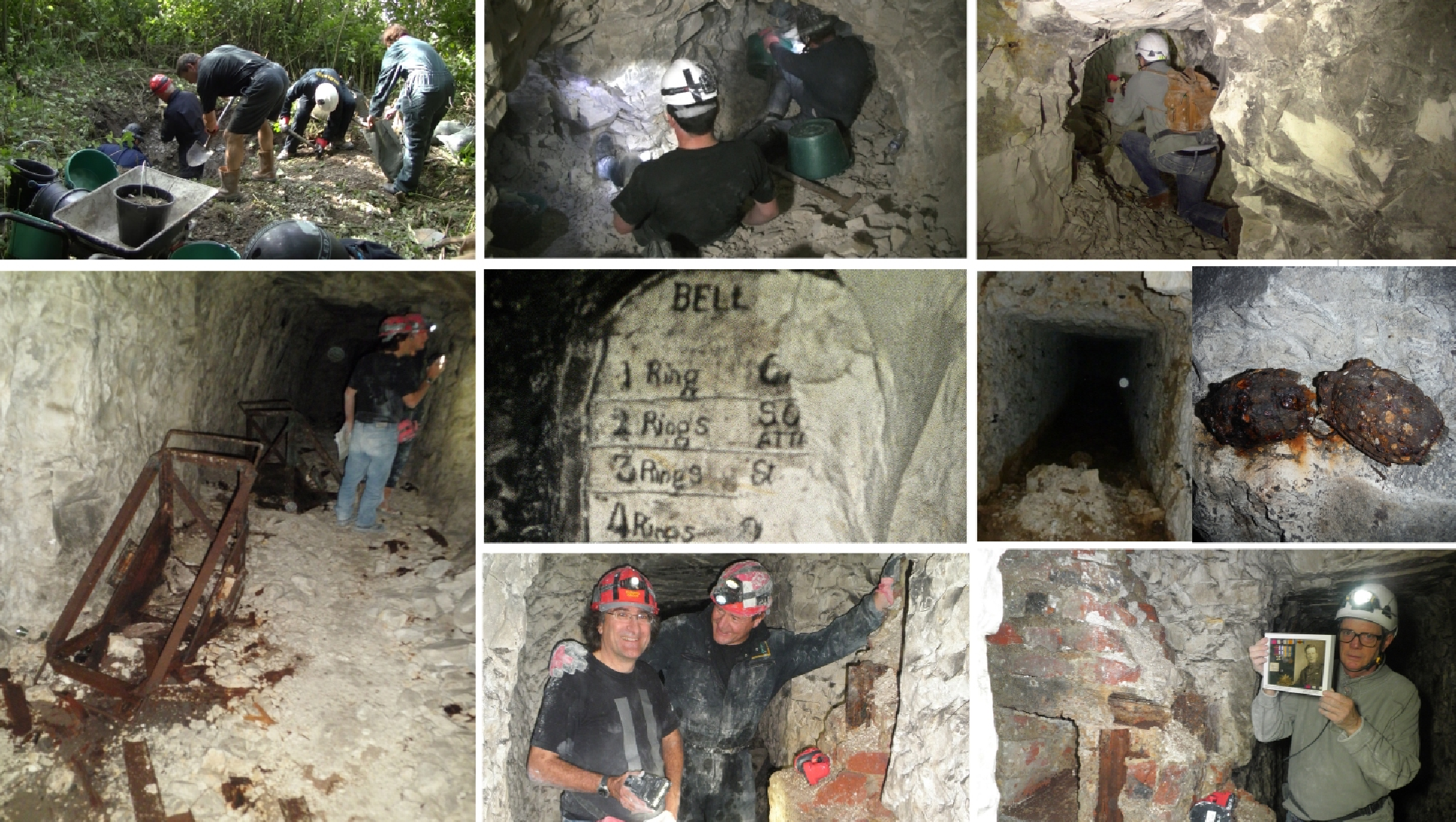
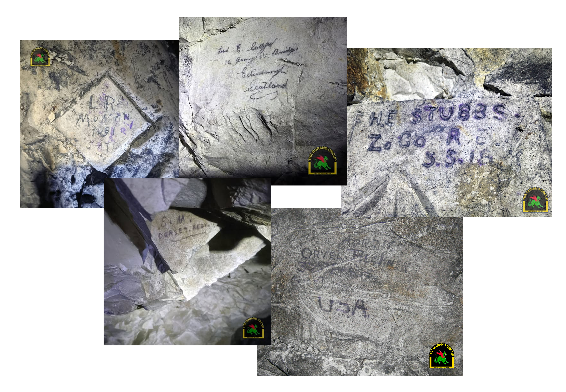
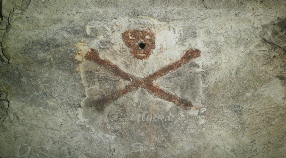
In May both companies attempted to escape to the coast to avoid German encirclement. Whilst the great majority of 240th AFC were taken off the beaches at Dunkirk on the night of 31 May, almost a third of 170th TC were captured and spent the remainder of the war in prisoner of war Camps in Germany, Poland and Czechoslovakia. Below are examples of graffiti found in the Hulluch Tunnels from both companies for whom we have found living descendants.

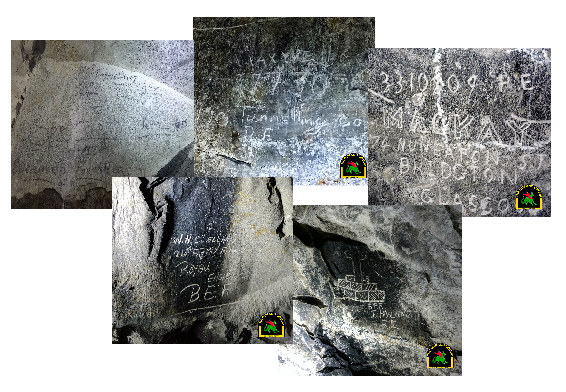
Below is a collage of Great War graffiti found in the Hulluch Tunnels, drawn by many different individuals from a variety of military units. Click on the image to take a closer look at some of the individual stories behind them.
WW2

GREAT WAR
GRAFFITI
IN THE
HULLUCH
TUNNELS
TUNNELS
HULLUCH
IN THE
IN THE HULLUCH TUNNELS
IN THE


WW2
GRAFFITI
IN THE
HULLUCH
TUNNELS
TUNNELS
HULLUCH
IN THE
IN THE HULLUCH TUNNELS
IN THE
All materiel on this site (except where indicated) is © Durand Group 2025